

The right equipment gives you mobility. The right home lets you use it.
A wheelchair, a frame, or a stairlift gets you moving. But the house still throws up daily obstacles: a light switch out of reach, a blind cord you have to lean for, a front door across the room when the carer arrives.
A smart home closes that gap. It makes the house itself respond, so a disability or the limits of age decide less about how you live. Technology cannot replace human care, and it does not try to. It removes the small barriers and daily risks that wear people down, which often means staying in the home you love for years longer.
The Real Smart Home builds this around one system: SH-Pro. Lights, blinds, locks, sensors, heating and cameras run through a single platform instead of six separate apps. Not a box of plug-in gadgets, but one system designed into your home and installed properly, so everything works together. One way to control everything, one way for family to check in. Here is how it works in a real home.
See your home, tap to control
Most smart home apps bury everything in lists and menus. SH-Pro replaces that with an interactive 3D floorplan of your actual house.
You tap the room, or the item, on a picture of your own home. Tap the lounge lamp to turn it on. Tap a window to close the blind. No searching, no learning which menu hides which device.
It runs on a phone or tablet, or it can be fixed to the wall as a permanent control panel at the right height by the bed or the door. For a wheelchair user or anyone with limited reach, a panel set where you can actually get to it beats hunting for a phone.
Try this demo: click the Bulbs to turn ON/OFF the lights, tap the  Movie scene (inside Presets) to dim the house, or open the camera icon to see AI object detection in action.
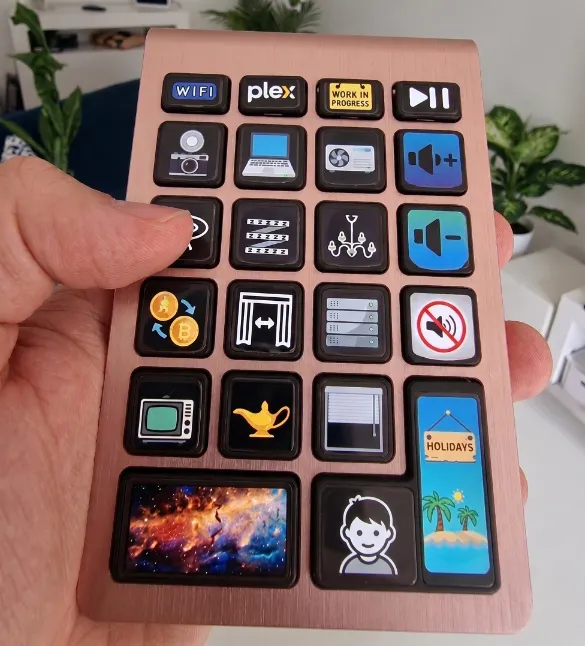
Real buttons for those who want them: the universal remote
Not everyone wants a screen, and not every hand works a touchscreen easily. For those who prefer the feel of physical buttons, SH-Pro programmes one custom remote that controls the lot.
Lights, blinds, heating, the TV: all the key functions on a single handset. No juggling five remotes, no guessing which one does what. It suits anyone with limited dexterity, tremor, or anyone who simply wants a no-fuss solution. The same commands run through SH-Pro, so the remote and the floorplan stay in sync.
Quiet, comfortable lighting and ventilation
In most UK bathrooms the light and extractor fan share one switch. Wash your hands and the fan roars on for no reason. That noise is grating, and for hearing aid users it can be genuinely disorienting.
SH-Pro splits them. The fan runs only when a sensor detects real humidity, so it stays silent for quick visits and stops pulling warm air out of the house.
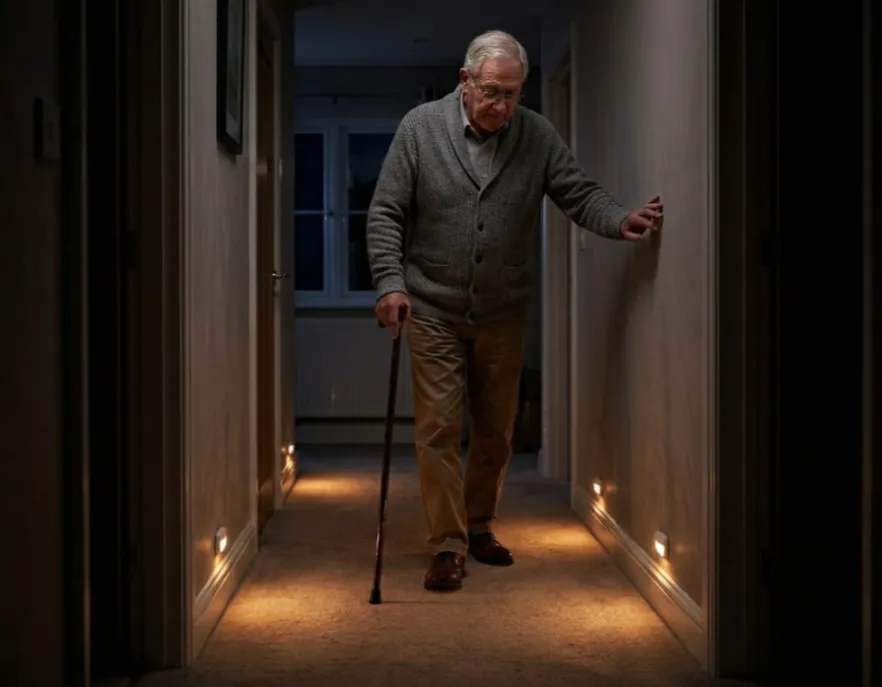
Sensors built into the hallway handle the other common risk: moving around at night. Motion lights the path at a soft, dimmed level, so there is no fumbling for a switch in the dark and far less chance of a trip or fall for someone already unsteady on their feet.
Blinds that move on their own
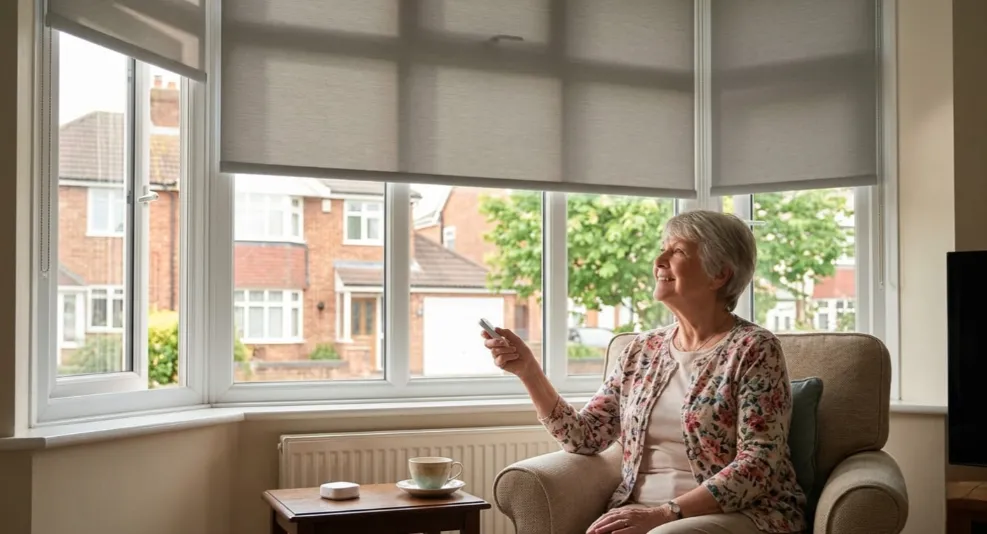
Heavy curtains and tangled blind cords are a daily struggle, and reaching across furniture to work them is a real fall risk. From a seated position they can be impossible.
SH-Pro runs blinds on a schedule. They open in the morning for light and close at dusk for privacy and warmth, with no effort from the resident. If the TV glare gets bad, the same blind closes from the remote, the wall panel, or a voice command, without anyone leaving their seat.
Secure access without getting up
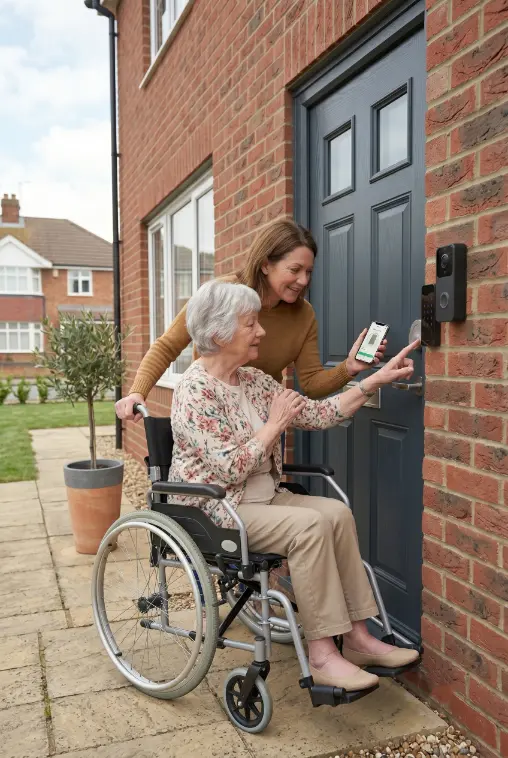
Reaching the front door in time is stressful and tiring for anyone with limited mobility, and harder still for a wheelchair user crossing the house.
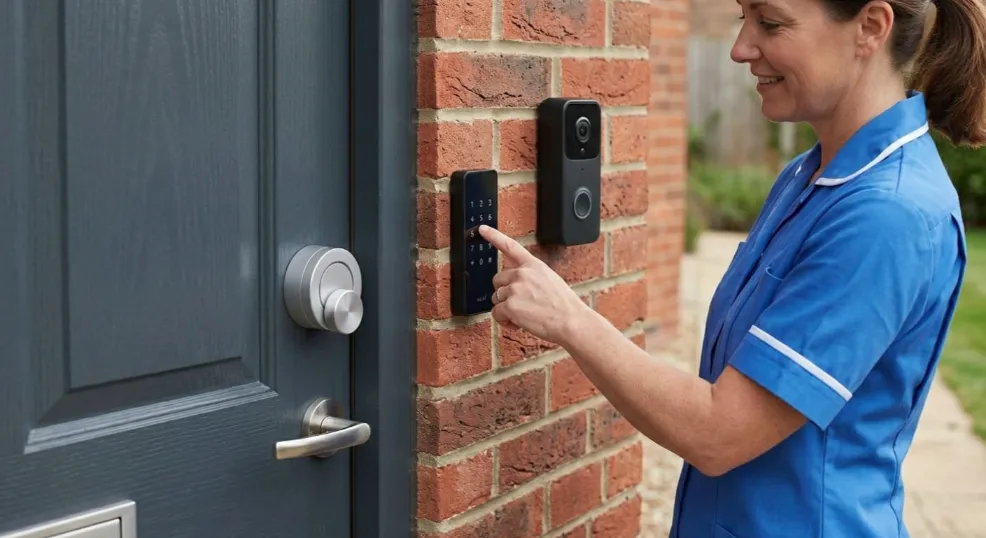
A smart lock with a keypad or fingerprint reader gives trusted carers and nurses their own entry code. They let themselves in safely, and the resident stays seated. A video doorbell shows who is at the door on the tablet or wall panel, so visitors get screened and spoken to before anyone unlocks anything. Both are part of the same SH-Pro system, so a support worker can come and go without the resident having to move.
One button for help
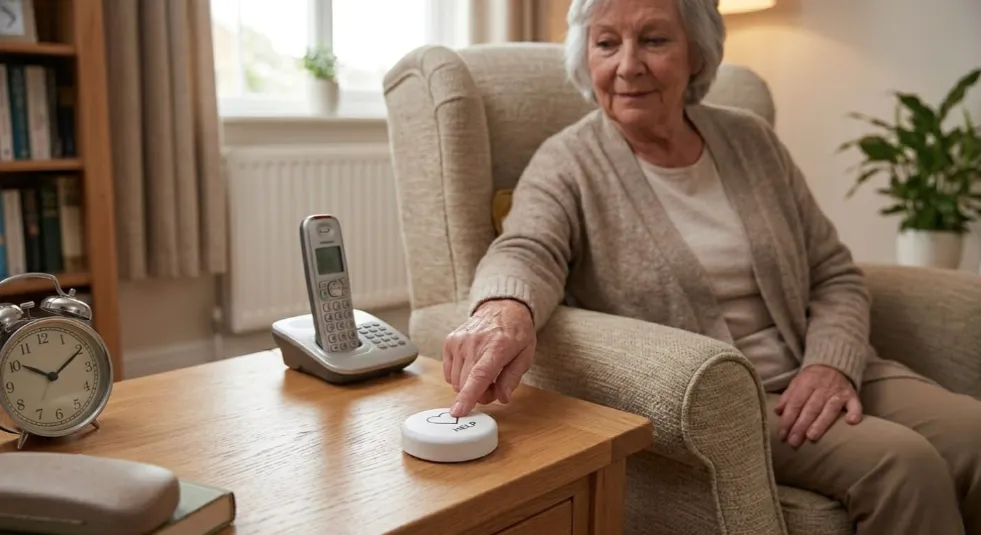
When something goes wrong, the phone is rarely within reach. A simple help button fixes that.
SH-Pro links a single press to an instant alert. Place it by the bed, the chair, or the bathroom, and one tap notifies family or a carer that help is needed. No unlocking a phone, no dialling, no explaining where you are. For someone living alone after a fall, the difference between a button by the armchair and a handset across the room is the difference that matters.
The quiet watchman: discreet sensors, no cameras inside
Families want to know a loved one is alright. Nobody wants cameras pointed at them in their own home. SH-Pro solves this with sensors built into the home instead of surveillance, and the family only ever sees activity, never a video feed.
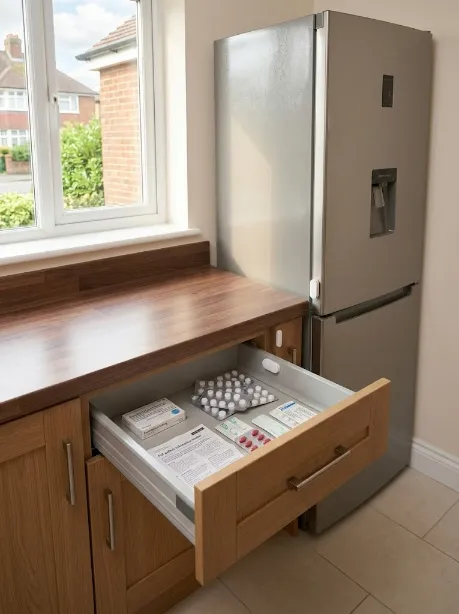
A sensor on the medication drawer or the fridge shows whether someone has eaten and taken their pills. If the drawer has not opened by a set time, SH-Pro sends the family a gentle alert. Occupancy sensors flag the opposite problem: no movement for an unusual stretch can be an early sign of a fall or illness, and the family gets an early warning rather than finding out too late.
It goes further than cameras. Many mass-market smart gadgets send everything (movement, routines, who comes and goes) to a company’s cloud servers, where a vulnerable person’s daily life becomes data on someone else’s computer. SH-Pro keeps it in the house. The information stays on-site, seen only by the family who set it up, not by a third party. For an elderly relative, that is the difference between being cared for and being watched by strangers.
This is the part that lets family stop hovering. The system watches quietly so they do not have to.
One system, every stage of life
For disabled living
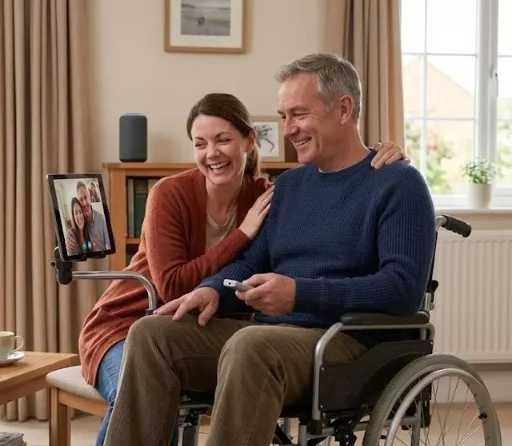
Voice control and automation take the physical reach out of everyday tasks. Lights, doors, blinds, and heating respond without a switch or a cord, so a younger disabled resident can run the whole house from a wheelchair.
For elderly living
The home keeps working even as reaching and bending get harder. The same controls that help a wheelchair user also remove the daily strain for an older resident who wants to stay in their own home.
For the family
Instead of phoning to check in, family members get a quiet SH-Pro notification: the medicine drawer opened, the blinds went up. Proof the day is going fine, without anyone being watched or pestered.
In short
Smart home technology does not replace human care or the equipment that keeps people mobile. It removes the small daily barriers and dangers of living alone, and gives back control.
The Real Smart Home brings it together in one system, all running on SH-Pro. Disabled and elderly residents keep their dignity and their independence, and stay in the homes they love for longer.
Your "Independent Living at Home" Questions, Answered
Can someone use a smart home if they struggle with technology?
Yes. SH-Pro replaces app menus with a 3D floorplan of your actual home: you tap the room or item on a picture to control it. If screens aren’t your thing, one custom remote handles lights, blinds, heating and the TV. No training needed.
How does a smart home help a wheelchair user specifically?
It removes the physical reach from daily tasks. Lights, doors, blinds and heating respond from a wall panel, a handset, or voice, with no switch or cord to get to. Carers get their own smart-lock entry code, so support workers come and go without the resident having to move.
What happens if there's an emergency or a fall?
A single help button, placed by the bed or chair, sends an instant alert to family or a carer with one press. Separately, occupancy sensors flag unusual stillness, so if no movement is detected for an unusual stretch, the family gets an early warning automatically.
Does this mean putting cameras inside the house?
No. The monitoring runs on discreet sensors, not interior cameras. Family see activity only (a medication drawer opening, blinds going up), never a video feed. The one camera is the optional video doorbell, which points outward at the front door.